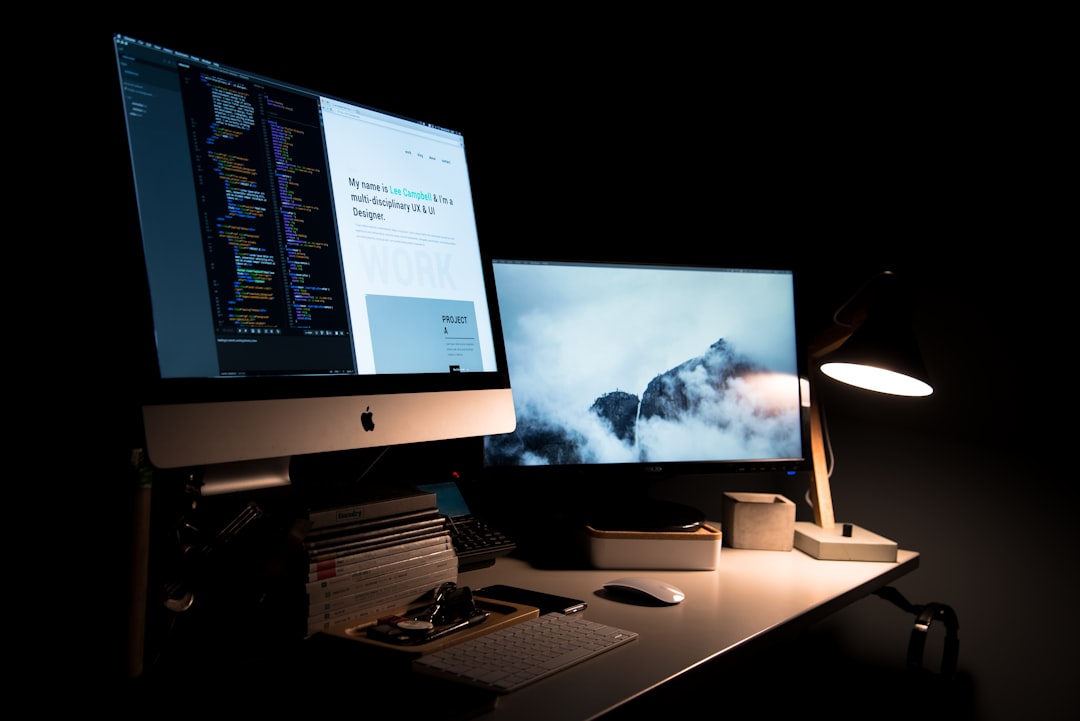
Choosing the right desktop wallpaper size should be simple, but screen resolutions, aspect ratios, scaling settings, and multi-monitor setups can make it confusing fast. This guide gives you a clear reference for 1080p, 1440p, 4K, ultrawide, and older display formats, then shows you how to select, crop, and export background images so they look sharp without awkward stretching or clipped focal points. Keep it bookmarked as a working screen resolution guide whenever you download, design, or update desktop wallpaper.
Overview
If you only need one rule, it is this: match your wallpaper dimensions to your display’s native resolution whenever possible. A wallpaper that matches the screen exactly will usually look cleaner than one that has to be stretched, tiled, or enlarged by the operating system.
That sounds straightforward, but there are two related variables behind every desktop wallpaper size: pixel dimensions and aspect ratio. Pixel dimensions tell you the exact size of the image, such as 1920 × 1080. Aspect ratio tells you the shape, such as 16:9, 16:10, 21:9, or 32:9. Both matter. An image can have plenty of pixels and still crop badly if the shape does not match your monitor.
For most current displays, these are the sizes people look for most often:
- 1080p wallpaper size: 1920 × 1080 pixels
- 1440p wallpaper size: 2560 × 1440 pixels
- 4K wallpaper size: 3840 × 2160 pixels
- Ultrawide wallpaper dimensions: commonly 2560 × 1080 or 3440 × 1440
Older and legacy monitor sizes still appear often in offices, schools, and home workstations. Source material on common wallpaper sizes also notes older desktop standards like 1024 × 768, 1280 × 1024, and 1920 × 1080. That is a useful reminder that desktop wallpaper sizes change with popular monitor resolutions, so no fixed list stays current forever.
In practice, the safest approach is to identify your monitor’s native resolution first, then choose or create a background image that matches both the resolution and the aspect ratio. If you make your own design backgrounds, start from the exact canvas size for the screen you are designing for.
Core framework
Use this framework whenever you choose a desktop wallpaper, create free backgrounds for download, or prepare editable background assets for different screen types.
1. Identify the screen’s native resolution
Your native resolution is the display’s intended pixel size. On a standard Full HD monitor, that is usually 1920 × 1080. On a QHD display, it is commonly 2560 × 1440. On a 4K display, it is commonly 3840 × 2160.
If your system is set to a scaled interface size, that does not change the wallpaper resolution you should use. Interface scaling affects icons and UI text, but the background image still benefits from matching the monitor’s native pixel dimensions.
2. Check the aspect ratio, not just the resolution label
Two screens may look similar in marketing language but need different wallpaper crops. For example:
- 1920 × 1080 is 16:9
- 1920 × 1200 is 16:10
- 2560 × 1080 is 21:9 ultrawide
- 3440 × 1440 is also ultrawide, but sharper and taller than 2560 × 1080
- 5120 × 1440 is super ultrawide, often 32:9
If you place a 16:9 image on a 21:9 monitor, the operating system will usually crop the left and right edges or stretch the image. Either result can spoil a strong composition.
3. Choose the right source image size
A larger source image can usually be cropped down. A smaller one often cannot be enlarged cleanly. That means a 4K background image is flexible for many uses, while a 1080p file may look soft on a 4K screen.
As a simple rule:
- Use exact-size files when available.
- Use larger files if you need room to crop.
- Avoid using smaller files than the target resolution unless softness is acceptable as part of the look.
This matters especially for texture backgrounds, abstract backgrounds, and minimalist background designs where softness or compression artifacts are more noticeable across large flat areas.
4. Design for safe zones
Desktop wallpaper is not viewed on a blank canvas. It sits behind taskbars, docks, desktop icons, widgets, and shortcuts. If you are creating your own wallpaper, keep important text, logos, or focal objects away from the edges and corners unless you know the user interface layout.
A safe composition usually means:
- Main subject slightly off-center or centered with breathing room
- No critical text near the bottom edge where the taskbar may sit
- No detailed focal point hidden behind desktop icons
- Enough visual quiet around the center for usability
This is especially useful when creating aesthetic backgrounds or design backgrounds meant for broad download use.
5. Understand fit options
Most operating systems offer similar wallpaper placement options. The names vary, but the behavior is familiar:
- Fill: image fills the screen and may crop edges
- Fit: image stays fully visible and may add empty space
- Stretch: image is distorted to match screen shape
- Center: image appears at original size in the middle
- Tile: image repeats across the screen
For most desktop wallpaper uses, Fill gives the best full-screen appearance if the aspect ratio is close. Fit is better when you must preserve the whole image. Stretch is rarely the best option for polished background images.
6. Keep a practical size reference
Here is a clean desktop wallpaper sizes reference for common formats:
- 1024 × 768 — 4:3 legacy desktop wallpaper
- 1280 × 1024 — 5:4 older office monitor format
- 1366 × 768 — common older laptop resolution
- 1920 × 1080 — Full HD / 1080p / 16:9
- 1920 × 1200 — WUXGA / 16:10
- 2560 × 1440 — QHD / 1440p / 16:9
- 2560 × 1600 — 16:10 high-resolution display
- 3840 × 2160 — UHD / 4K / 16:9
- 5120 × 2880 — 5K / 16:9
- 2560 × 1080 — ultrawide / 21:9
- 3440 × 1440 — ultrawide / 21:9
- 3840 × 1600 — ultrawide / 21:9
- 5120 × 1440 — super ultrawide / 32:9
If you publish wallpaper downloads, it is smart to organize files by both label and dimensions, such as “4K backgrounds — 3840 × 2160” rather than using shorthand alone.
Practical examples
Here is how the framework works in real use.
Example 1: Choosing a 1080p desktop wallpaper
You have a standard 24-inch monitor at 1920 × 1080. The best wallpaper size is 1920 × 1080. A larger file like 3840 × 2160 can also work well, because the system will scale it down cleanly. A smaller file like 1280 × 720 will often look soft or compressed.
For a 1080p background size, 16:9 composition matters. If you choose a tall portrait crop or a square image, your desktop will likely crop heavily. Abstract backgrounds and gradients usually adapt more easily than photographic scenes with a clear horizon line.
Example 2: Upgrading from 1080p to 1440p
Many people keep using old HD backgrounds when they move to a 2560 × 1440 monitor. The result can be slightly blurry, especially on textural or detailed wallpaper. For a crisp look, use a file created at 2560 × 1440 or larger.
This is a good example of why “HD backgrounds” can be too vague as a search term. HD often refers to 1920 × 1080, but that is not enough for a true 1440p display. If you run a wallpaper library, labeling by exact dimensions helps users avoid the wrong download.
Example 3: Selecting a 4K background image
A proper 4K wallpaper size for most desktop use is 3840 × 2160. If your monitor is 4K, this is the target you want. Detailed illustrations, paper texture, marble texture, and high-frequency patterns benefit from this size because fine detail survives better across the screen.
Be careful with highly compressed JPEG files marketed as 4K backgrounds. The pixel dimensions may be correct, but visible compression can still reduce quality. Flat gradient background designs and dark color fields are especially good at revealing banding or blocky artifacts.
Example 4: Designing for ultrawide wallpaper dimensions
Ultrawide monitors need special attention because cropping from a 16:9 file is often too aggressive. The most common ultrawide wallpaper dimensions are 2560 × 1080 and 3440 × 1440, with larger formats like 3840 × 1600 and 5120 × 1440 increasingly common.
For ultrawide screens, panoramic compositions work best. Good choices include:
- Landscape photography with extra horizontal breathing room
- Abstract backgrounds with directional flow
- Seamless pattern or texture backgrounds that can crop flexibly
- Minimalist background layouts with the focal point near the center third
If you are creating a wallpaper pack, it is better to build a dedicated ultrawide version than to simply crop the sides off a 16:9 master.
Example 5: Using one design across several screen types
Suppose you want one wallpaper concept for 1080p, 1440p, 4K, and ultrawide screens. Build the artwork at the largest practical resolution, then export multiple crops. Keep the key visual subject in a center-safe area. This makes the design more resilient when trimmed for different formats.
A practical export set might include:
- 1920 × 1080 for standard desktop wallpaper
- 2560 × 1440 for higher-resolution 16:9 screens
- 3840 × 2160 for 4K backgrounds
- 3440 × 1440 for ultrawide wallpaper
This same workflow is useful if you also create related assets such as website background images, presentation background graphics, or a Zoom background set. If that is part of your workflow, our guide to Best Free Zoom Backgrounds for Work, School, and Events is a useful companion.
Example 6: Making your own wallpaper from scratch
If you prefer to create custom design backgrounds, start with the final screen size rather than hoping to resize later. Source material from Canva’s wallpaper guidance highlights that desktop wallpaper sizes are tied to monitor resolutions and continue to change over time. It also points to common sizes such as 1024 × 768, 1280 × 1024, and 1920 × 1080, which is a helpful reminder to choose a canvas intentionally.
A simple build process looks like this:
- Find your screen resolution.
- Create a canvas at that exact size.
- Place the main subject away from icon-heavy corners.
- Export as PNG for cleaner graphics or high-quality JPEG for photography.
- Test the wallpaper on the actual desktop before publishing or sharing.
If your design includes scanned textures or print-based surfaces, a hybrid process can add character. For makers exploring tactile visual workflows, see Hybrid Workflows: Scanning Risograph Prints and Enhancing Them with AI Motion Tools.
Common mistakes
Most wallpaper problems come from a few repeatable errors. Avoid these and your background images will look better immediately.
Using the wrong aspect ratio
This is the most common mistake. A 4:3 image on a 16:9 monitor or a 16:9 image on an ultrawide screen will usually crop awkwardly. Always match the image shape to the screen shape first.
Assuming bigger monitor size means different wallpaper size
A 27-inch and a 24-inch monitor can both use 1920 × 1080 wallpaper if they share the same native resolution. Physical size and pixel size are not the same thing.
Downloading “4K” without checking the actual file
Some background download pages use resolution labels loosely. Check that the file is truly 3840 × 2160 if you need a 4K background size. Also inspect compression quality.
Placing text where icons will cover it
Quote wallpapers, calendar backgrounds, and branded desktops often fail because text collides with icons, docks, or widgets. Keep informational elements away from common interface zones.
Relying on stretch mode
Stretch fills the screen, but it also distorts circles, people, and geometric forms. For most aesthetic backgrounds and photographic wallpaper, use fill or fit instead.
Publishing only one download size
If you offer free backgrounds for a broad audience, a single 1920 × 1080 file is limiting. At minimum, provide a standard desktop option, a 4K option, and one ultrawide option.
Ignoring licensing when using sourced images
If your wallpaper includes found photography, venue imagery, or cultural materials, check rights before offering it as commercial use backgrounds. If licensing is part of your work, read How to License Concert and Venue Photos for Backgrounds, Merch, and Recap Videos and When the Everyday Becomes Yours to Sell: Legal Basics for Using Found-Object Imagery.
When to revisit
This topic is worth revisiting whenever your devices, output standards, or design methods change. Wallpaper sizing is not fixed; it moves with hardware trends and with the formats people actually use.
Come back to this guide when:
- You buy a new monitor or laptop
- You switch from standard widescreen to ultrawide
- You start publishing downloadable wallpaper packs
- You notice blurriness after reusing older background images
- New display standards become common in your audience
- Your design tool changes its export workflow or template system
A practical maintenance habit is to keep a small wallpaper checklist:
- Confirm resolution: read the exact pixel dimensions in your display settings.
- Confirm ratio: note whether the screen is 16:9, 16:10, 21:9, or 32:9.
- Choose or export the right file: exact size first, larger crop second.
- Preview on desktop: test with icons and taskbar visible.
- Save named versions: for example, wallpaper-1920x1080, wallpaper-2560x1440, wallpaper-3840x2160.
- Update your library: retire files that no longer fit current display habits.
If you publish for a design-minded audience, treat wallpaper sizes as a living reference rather than a one-time article. As new screen formats become normal, your best background images should be easy to find by exact dimension, clear aspect ratio, and intended use. That makes life easier for readers who need a fast answer and better-looking desktops.
The simplest long-term strategy is to design with flexibility: create a strong master composition, protect the center-safe area, and export multiple screen-specific versions. That one habit will make your desktop wallpaper, HD backgrounds, 4K backgrounds, and ultrawide releases more useful now and easier to maintain later.